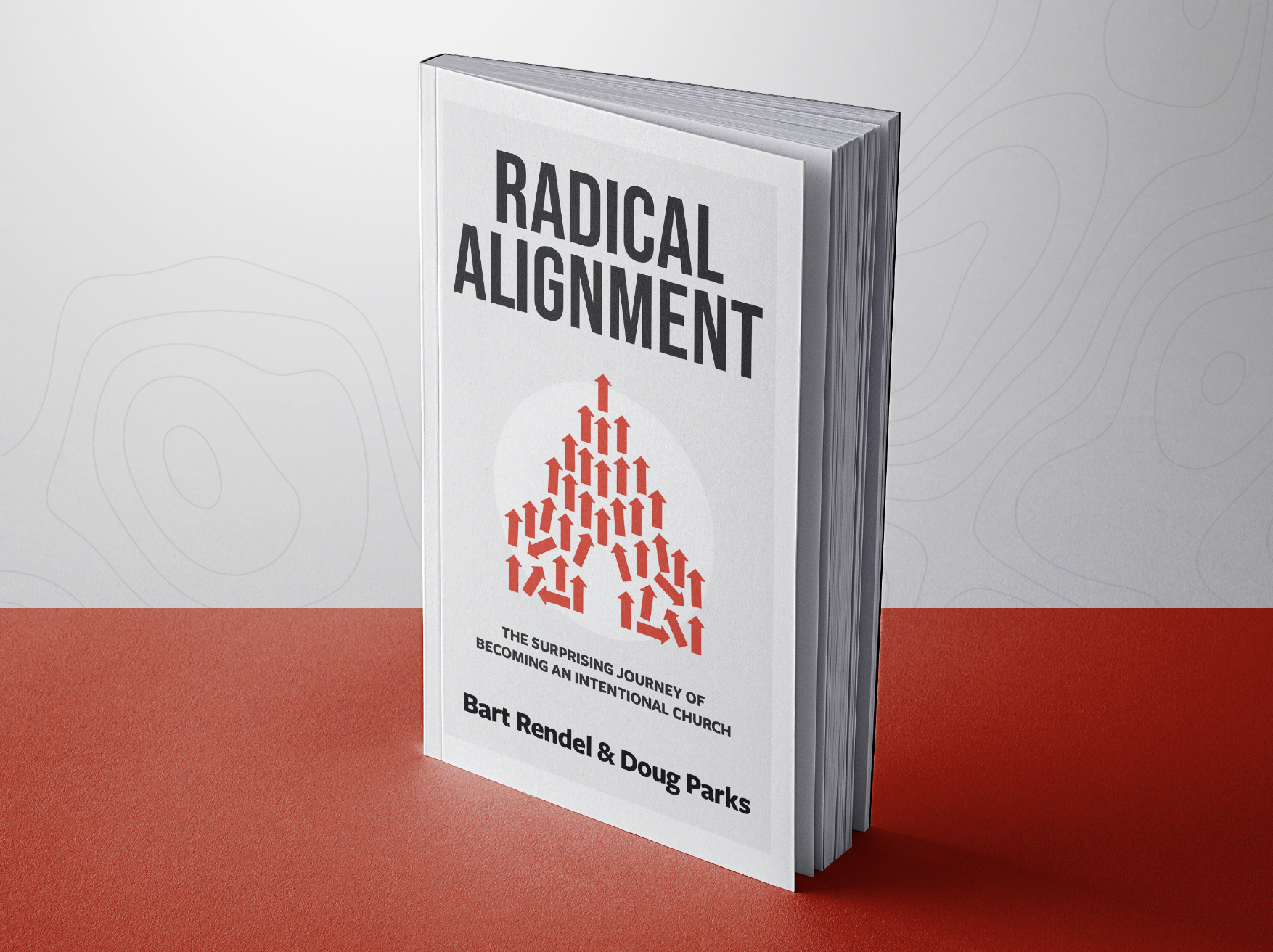
Radical Alignment: The Surprising Journey of Becoming an Intentional Church

Stories of Radical Alignment to the Great Commission
-
“Because someone was praying for their One, my dad has been brought back into the fold.” In just ten months, Beulahland NexGen volunteer Jessica Sayles lost two people she loved: her mother and her brother. As a preacher’s kid, Jessica spent much of her childhood connected to the local church. So when she and her father lost the people closest to them, they knew who to turn to. Though her dad never lost his love for Jesus, he fell away from his local church.
Because of the leadership’s efforts to become more intentional about the lost, many people in the congregation are pursuing their One through prayer and service. “I didn’t realize it at the time, but a lady sitting in my row had been praying for my dad as her One.” And because of that woman’s intentionality, Jessica’s dad now has a place to call home once again. That’s what God can do with an intentional church that is radically aligned with the Great Commission. But . . . how did they get there?
It Started with a Book
A good book fueled by the power of the Holy Spirit (and lots of prayer) has the potential to start a movement. After Beulahland’s Executive Pastor, Greg Holt, recommended Intentional Churches, Senior Pastor, Dr. Carlos Kelly, read the book on his annual vision retreat. After scouring the book from cover to cover, Pastor Kelly knew God was calling Beulahland Bible Church to dive in. “I literally read it in one day. It was like one of those aha moments. This was exactly what we had been praying for.” In February 2024, they gathered their team—a group of fourteen people from across two campuses—and began working together to implement ChurchOS. “We’ve always been focused on the Great Commission, but this has helped us to clarify how we go about implementing that process.”
The focus of Beulahland Bible Church over the last twenty-six years has been the Great Commission and the Great Commandment. Pastor Kelly preached the Great Commission every single year, and it was woven into the foundation and structure of what they set out to do within their community. “But we didn’t have a system in place where we were intentional about how we were able to shift the mindsets. I didn’t realize how many of our church members had a consumer mentality. When they came to church, it was ‘What’s in it for me?’ as opposed to ‘What can I do?’ and ‘What is my purpose?’”
Pastor Holt and Pastor Kelly tapped the shoulder of Jessica Sayles, Sam Reid, Beulahland’s Director of Assimilation, and ten other individuals with differing backgrounds, personalities, perspectives, and relationships with Jesus.
“One thing that came out of that experience is the passion everyone had for the church,” Sam said. “We’ve had some knock-down, drag-out meetings where we deconstructed everything we thought was wonderful and grand about Beulahland and started going under the hood, seeing how we really were as a church. That’s when we began to unearth and realize the shifts that needed to take place.” When the team gathered, they scrutinized every part of the church: what was working, what wasn’t, and what needed improvement. They had to identify the sacred cows that weren’t leading them to reach the One.
“We went through and dissected every single piece of the church, down to the signage, and we were very open and honest,” said Jessica. “We know that we’re doing this to make disciples so that we can get more people into the kingdom of God.”
Planting Seeds and Transforming Mindsets
In the South, it’s not uncommon for people to say, “There’s a church on every corner.” And with that, Sam said, comes a lot of traditionalism. “You come to church, you get your word, and you go home. There is and was a lot of inward focus when it came to worship. But one of the things that has come out of this Intentional Church process is that we now have an outward focus. We now have a sense of responsibility in terms of what it is that we are required to do as believers. It is truly a Matthew 28:19-20 focus—the IC process has really brought that to life for us.”
When you’ve got a group of fourteen people fiercely committed to reaching the lost, it’s hard to slow down that forward progress and take your foot off the gas so the entire church can catch up. “The challenge is that there’s a whole church that has not been in that room. They have no clue about the terminology, the concepts, and the things we’re presenting. It takes time. That’s what I see this initial process as . . . planting seeds,” Pastor Kelly said. “And over time, we’ll reap a harvest and mindsets will begin to transform.”
Pastor Kelly spent an entire year preaching on the process, meeting with church leaders, and kicking off their new direction with some easy wins—Vision Initiative Projects (VIPs)—to get the process started. “An easy win for us was changing our website. We didn’t realize how horrible it was until we looked at it through the lens of the One,” he said. “We realized our website was more for us on the inside than it was for being evangelistic.” Not only did they revamp their entire website, but they also developed a new mission and vision statement that reflects their intent and purpose: “We make disciples.”
Leaders Go First
It’s one thing to go on this journey as a church, but as leaders, you have to go first. And it starts with a personal conviction. For Pastor Holt, making disciples doesn’t just start and end with an altar call anymore. It goes beyond that. “Here’s the thing that I was convicted about: A focus on sharing the Gospel. When we give an open invitation during church service, people come down and accept Christ, and we’re excited. And for me, that’s it! However, that’s not making disciples. That is the first step in making a disciple. I had unlinked evangelism and discipleship. But really, it’s not a separation. They work together. You’re evangelizing by sharing the Gospel, and now you’re making disciples by helping them to grow in their relationship with Christ . . . Our vision statement talks about leading people to their next step with Christ. What is that person’s next step with Christ?”
Pastor Holt went on, “But you know what? Here’s what I was even more convicted about. Before I became executive pastor, I was a pastor of discipleship for years, and in my assessment, I was a horrible pastor of discipleship because I was more concerned with classroom activities in terms of making a disciple. But discipleship is about relationships. How can you be a pastor of discipleship if you’re not thinking about making disciples the way Jesus Christ made disciples, where he was intentional and doing life with people?”
As the Director of Assimilation, Sam Reid was convicted about just how much new believers get thrown their way. “I think we almost try to create Christian experts within a ten-to-fifteen-minute time frame of them making that decision. I thought it was very, very important to simplify that process to a degree, give it structure, and let them know their responsibility now that they’ve made that decision,” he said. “Belonging to a family is a beautiful thing, but just like with any other family structure, the more you complicate it, the more you take away from the main things. It takes away from the beauty of the journey.”As one of Beulahland’s NexGen youth leaders, Jessica felt very convicted that her life needed to reflect what she was teaching. “When it comes to the kids, I have to make sure that I not only talk the talk, but walk the walk, providing them with opportunities and showing them the way and how to find their One.” Jessica has also felt a conviction to focus on the NexGen leadership team and teachers, creating opportunities for them to minister to the kids in a way that is fun and One-aware.
Becoming Radically Aligned
The leadership and the steering team have been meeting for over a year and a half, working through their intentional growth plan. Now, they’re focusing on the church as a whole, helping the congregation change their mindsets and learn what it looks like to go after the One. A key element? Their six-week “For the One” campaign. Pastor Kelly preached on the Great Commission and what it means to be a disciple. Small groups also met throughout the campaign to help equip and challenge each person to put what they were learning into practice.
Pastor Holt’s goal is that people would begin to make disciples as naturally as they breathe—that it would become ingrained in their DNA. “So, if I can get one person per year to just intentionally say, ‘I’m focusing on making a disciple.’ One person, over a five-year impact, can make thirty-one new disciples. If one person took one disciple per year and taught that disciple how to make a disciple. And that’s the multiplier, or force multiplier, that creates that many disciples. For me, it’s people just being intentional and saying, ‘I am doing this,’ not based upon a campaign, not based upon us forcing you. But ‘This is what I do, because I understand the eternal ramifications.’”
Beulahland Bible Church is still very much in the process of becoming more radically aligned to the Great Commission, but they are well on their way. They’re intentionally making disciples who make more disciples, and they’re encouraging other churches that are on the fence with this idea of radical alignment to do the same.
“God has given us one of the most precious gifts that anyone could ever give us,” Sam said. “Why not share that? If there’s any doubt in your mind, just look at the intentionality of Matthew 28:19. And as you share the Gospel, as you make disciples, not only are you pouring out, but you’re getting back tenfold. It’s one thing to grow in numbers, but when you grow spiritually, and you grow healthy, that is one of the most fulfilling gifts that you can ever, ever experience, and that is truly what Intentional Churches is about. Being intentional, sharing the Gospel, and making disciples. Because when you share, you build the kingdom, you build your relationship. And be ready, because your church is going to grow.”
-
“We want to see God do a work at Connection Point Church that only Jesus can get credit for.” That’s the slogan Connection Point Church (CPC) of Jackson, Missouri, keeps coming back to time and time again. And over the past few years, they’ve seen God grow their church in ways they could not have imagined just a few years ago. He has used CPC to reach the young families in their town of just 17,000 people in a new way. Now, they’re the largest church between St. Louis, Missouri, and Memphis, Tennessee, and recently opened the doors to their first multi-campus site, reaching new believers for the very first time.
Growth Without Implosion
Lead Pastor Chris Vaught joked that they’re in survival mode as they work to intentionally keep up with all the growth. But God has prepared CPC for “such a time as this” with the implementation of the ChurchOS Living Toolbox, giving them a common language, shared conviction, and a leadership team that is activated and ready to reach the Ones in their community. And now, they’re training the next generation of ministry leaders on how to be One-aware through their school of ministry.
“With all of the crazy growth of the past two years, we needed to hire more staff to help carry the weight of responsibility. Half of our new staff are all interns from the internship program,” shared Pastor Chris. “But the beautiful thing is, they came onto the team on day one already knowing our systems and ready to hit the ground running. We didn’t lose time, even though they were inexperienced. They knew the double impact. They knew our Intentional Growth Plans. They understood how the program works here, the inner workings. [Because of that] we feel like we’ve been able to handle the growth without implosion.”
Targeting the Unchurched
God has used CPC to reach brand-new believers in Southeastern Missouri—an area known to be religious, but with many still missing a relationship with Christ. Once they figured out who their One was, they began to target them in every area: the marriage ministry, the type of discipleship groups they did, what media and outreach looked like . . . and their Ones began to flood the church.
“For several months, the number one question to our prayer team was, ‘He mentioned John 3:16. What is that?’ They didn’t understand the books, chapters, and verse references. We completely had to change our vocabulary,” Pastor Chris said. “It’s so exciting, too, because we actually are reaching the One in our community with little to no religious background, and they’re coming to faith in Christ. We baptized about 250 people a year for the last few years.”
Now, the challenge is discipleship. “We’re trying to get past mobilizing the staff and get into mobilizing the body,” said Media and Outreach Pastor Darren DeLoach. “And we’re right on the edge of that, but we need it to be the thing that’s taking place across the entire body. Once they come to know Christ, they get themselves plugged in, they have to repeat themselves over and over again. Everybody needs their Timothy, and everybody needs to find that mentor in their life. If we can get that mentality with everybody, it spreads and spreads fast—it changes the community.”Changing the Methods, Not the Mission
CPC’s Ministry Strategist, Lisa Vaught, shared that the ChurchOS Living Toolbox is what has helped their church on the journey to radical alignment, specifically the Great Commission Engine. Every month, they have team members teach the Great Commission Engine during their staff meetings because “if you can teach it, you remember it . . . it would remind us that we have to be 70% leaning toward the One.”
The ChurchOS Living Toolbox has helped CPC’s leadership break down the silos of ministries, constantly reevaluate their ministry buffet, and assess what needs to change so they can unashamedly reach the One in their area, staying One-aware at all times. “Change is difficult, but if the church does not practice a rhythm of assessing and changing to accommodate, it will easily become content with the people they have and lose sight of the One in its community,” Lisa said. “The mission is then lost, and the church is destined to fade out.”
That’s exactly what they learned through the process of opening their first multi-campus site in Bollinger County. When the elders of Cottage of Grace Church approached them with the offer to utilize their building and assets, the CPC team knew God was moving. Cottage of Grace Church was born out of tent revivals in the area and grew into a thriving and active congregation. But they weren’t opening their eyes to the change happening all around them. “Culture in the county was changing, but Cottage of Grace was still trying to press forward with the same style of service that they were accustomed to, finally dwindling down to the six elders that had started the church,” Lisa said. Those elders approached Pastor Chris and asked if Connection Point Church would plant a campus in their building—with their assets. They didn’t want to see their church die . . . they wanted to see the mission of Jesus live on past themselves. And on opening day, CPC BOCO was the largest church in the whole county, reaching young, unchurched families hungry to hear the Gospel.
Celebrating the Ripple Effect
A radically aligned church is a church ready and willing to do what God is calling them to do—no matter what that looks like. It’s been three years since CPC decided to go all in with Intentional Churches, becoming a One-aware and activated church. But that wouldn’t have been possible without alignment across every area of leadership, including the elder board. “Most of my elders came out of the traditional world. But they get so emotionally moved by the stories that they’re like, ‘We don’t want to hinder this at all.’ And they may not even have anything in common with Ones, but we’re finding it’s a ripple effect,” shared Pastor Chris. “At first, staff and congregants were worried that if we’re targeting after the One (a 28-year-old male and a hurting 27-year-old female struggling to find purpose), what kind of church are we going to become? But there’s that ripple effect. Because once you start reaching them, their parents and their grandparents want to come to the church that their son or daughter or granddaughter started coming to.” While their demographic dropped by ten years, the church now has more 50-, 60-, and 70-year-olds than they’ve ever had.
“We haven’t had negativity yet of staff or congregation losing sight of the One, even though we’re three years into it,” said Pastor Chris. “And I pray we never do. But I do believe one of the things that’s helped slow that down is that we’re constantly telling that story . . . whether it’s in an elders meeting, helping them understand why we do what we do, videoing testimonies, sharing in staff meetings.” Pastor Chris believes that if they can keep people’s hearts burdened for the lost person of their community, they can remember why they’re doing ministry in the first place. “Hopefully with the help of the Holy Spirit, we can keep pushing that self-centeredness away. If we keep celebrating why that 70-year-old started coming to our church (because their grandson got saved) . . . if we keep communicating those stories, it helps keep hearts soft.”
Becoming Missionally Aligned
Every church begins with longevity in mind. No one ever plants a church believing that they’ll close their doors eventually. The goal is to reach every last person with the Gospel. But Lisa reminds us, “If we don’t want to max out our church life cycle, then change is constant. Our job for longevity and reaching souls for Christ is to assess, listen to the Holy Spirit, look at the facts, change, and go again. We’re just going to have to keep doing it. Change every time requires people to lose their comfort zones, what they’re comfortable with, and what their preferences are. We’ve had this great success so far, but I feel like we’re always going to have that hurdle of change.”
Radical alignment is about aligning the church with the mission Jesus gave us in the Great Commission. “Jesus was very strategic. When you look at the Great Commission, it’s a strategic outline of what the church should be about,” shared Pastor Chris. “How it’s contextualized to a local community is the fun part.”
Pastor Chris believes that you can either be afraid of the mission, building your strategy around personal preferences and comfort, or you can build a strategy around the Great Commission. “We don’t have the right to change the mission Jesus gave his church; we are to be good stewards of it. Intentional Churches’ principles are going to help you live out the mission Jesus gave and help you figure out how to align your team and your church to operate within the Great Commission. So, then you have confidence when you are missionally aligned. You can do ministry with confidence that God is going to bless it.”
-
From Brokenness to Redemption
“From fall of 2021 to today, we have learned to own our story, not as one of failure, but one of redemption,” said Kevin Brimner, lead pastor of First Christian Church of Newburgh, Indiana. The church has seen its fair share of heartache and brokenness over the years. “Each of us, at some point, prayed, ‘God, if you want to move us away, we would not argue with it,’” shared FC Newburgh’s Teaching Pastor, Nathan Logsdon. But even though he and Executive Director, Holly Gillespie, wanted to do anything but stay, they chose to dig in their heels and get to work. So, what happened?
In 2005, FC Newburgh was on track to move its congregation into a brand-new building when an F3/F4 tornado touched down, causing devastation as it traveled from one end of the facility to the other. What was previously a $6–8 million project turned into a $13.5 million project—overnight. Meanwhile, the price of steel had skyrocketed, and the church, unfortunately, was underinsured. Needless to say, the enormous amount of financial pressure felt by their leadership caused just as much, if not more, destruction within their team. Soon after, their founding pastor decided to retire without a succession plan . . . only to plant a new church a mile down the road in their previous location. What was once a congregation of 1,400 people and counting dwindled to half in less than a year. “The hits just kept coming. There was betrayal, there was fighting, there was confusion. It was just ugly,” Holly shared. Ministry silos, distrust of leadership, confusion among the church, and a massive amount of debt sat heavily on the team’s shoulders. “We really should not be here,” Holly said. “When we started with Intentional Churches, our average weekly attendance for the end of December 2021, including kids and students, was 425. At that point, we owed $9.9 million on the building.”
In any story, that end-of-the-rope tension is what either makes you or breaks you. And that’s usually when the story gets interesting, right? In FC Newburgh’s case, God used that tension to grow, shape, and heal them so they could get back to focusing on the Great Commission once again. “People were jumping ship. They were like, ‘Yeah, let’s get away from this organization. This is toxic. This is unhealthy.’ And yet . . . there’s a remnant that was just not letting go of FC.”
Not Just Another Silver Bullet
It wasn’t until FC Newburgh partnered with Intentional Churches that they found a path forward. “I don’t think any other organization was interested in our story so much,” said Pastor Kevin. The leadership team realized that this intentional framework wasn’t just another silver bullet or quick fix. Rather, it was a long-term strategy.
“We had gone through iterations of silver bullets and iterations of, ‘Oh, this is the thing. Oh, no, no, this is the thing. Oh, if we just did this thing,’” Pastor Nathan shared. “It didn’t take long for me to go, ‘Okay, this is different.’ I think that evaluation piece is the part that is left out of silver bullets, because the assumption is the silver bullet is going to work, so you don’t evaluate yourself or it. But I think when you have that evaluation piece, you’re no longer striving for a fix, you’re striving for progress. And when you’re striving for progress, you can evaluate, get another current reality, and then move forward again and evaluate.”
For Holly, the standardization of ChurchOS—and how it spoke to the uniqueness of each church—was what stood out. “They weren’t trying to prescribe something for churches; their tools were for coming alongside and drawing out the best of who the church is. They weren’t trying to shape us or mold us into a certain box. They were guiding us, and that just was so different and so refreshing and so hopeful.”
“God set us up for Intentional Churches.”
As FC Newburgh’s leadership spent more time digesting their story and all they had been through, the work they had done up to that point began to make more sense. “Once Intentional Churches stepped in, all of a sudden, we began to see ways forward. We weren’t working well together. We needed more cohesive language. We needed all the things that Intentional Churches was bringing to the table,” said Pastor Kevin. “It’s the biblical story of redemption and the remnant and the faithfulness of God through the audacity of a few. And you know, it just doesn’t make sense that we’re still where we are, doing what we do, and we remind ourselves of that a lot.”
Now, because of the intentionality of their leadership, they’ve been able to utilize and see traction with the ChurchOS Living Toolbox and tools like the Great Commission Engine. “Radical alignment is seeping into our top layer of leadership,” Holly said. “We’re watching the saturation of this common language in the way that we approach things seep into our congregation, and it’s responsive and strategic. It’s not reactive, and that’s super empowering. There’s an energy around that.” As they implemented the tools within their ministries, they began to see how much it energized people. At the end of one training, one volunteer shared, “It was so clear to me that the Holy Spirit was present.”
Ones Reaching Ones
It’s been four years and counting since FC Newburgh took that leap of faith and put in the intentional work to get back to health and radical alignment. From their first install with ChurchOS, God has shown up in more ways than they can even count. “What have we not seen?” asked Pastor Nathan. “That would be a shorter list.”
Now, FC Newburgh’s heartbeat is that their Ones would begin to reach their Ones. That they would build relationships, invite them in, and begin to do life together. We can’t wait to see what God continues to do through the team’s intentionality as they chase after the One as a church radically aligned to the Great Commission. -
Learning to Speak the Same Language
Since the moment they opened their doors, Journey Church has been planting roots in the community of Jackson, Tennessee, reaching the lost and unchurched for the past fifteen years. Launched with a core group of forty sold-out believers, the church has since grown to 850—and is busting at the seams.
From the onset, Journey’s Lead Pastor, Jeremy Brown, planted the church with the most powerful mission possible: the Great Commission. And the leadership team is happy to say they have not experienced the mission drift that can often happen within churches.
Four years ago, Jeremy and Kris Pace, Journey’s teaching pastor, decided to join forces with Intentional Churches . . . not because they were internally focused, but because they wanted to see radical alignment—especially in their language across ministries. “I’ve been here seven years,” said Kris. “Intentional Churches (IC) is an interesting match for Journey because philosophically, we were already One-focused. All of those things were already completely in the DNA of Journey. It wasn’t a new concept. And nobody said, ‘Why are we doing that?’ Everybody said, ‘Good, let’s go!’ So, what IC did for us was help us completely align, which gave us momentum that we didn’t have before. It also gives us a little more accountability when it comes to processes and [helps us] stay focused when it comes to a very, very small target.”
Helping People Come to Know Jesus
When Kris joined the team, one of the very first things he did was talk to fifty different people throughout the church, asking questions like, “What makes Journey great to you? What’s the best thing about Journey?” Reflecting on that time, Kris shared, “All but one person out of fifty gave me the same answer, which has never happened in the history of anything in church. They said, ‘I think Journey may be the best place for somebody who doesn’t know Jesus to come and know Jesus.’ So, I got to walk into a culture where they had done masterful work of laying that out. Journey is still very much that today. If you walk into our church and you don’t look like you ought to be at church, more people will celebrate you than look down on you.” Kris continued, “There might be a neck tattoo and a few beards and a lot of ink and that stuff around . . . but nobody cares. The safety net is people couldn’t care less what you wear, what you drove, where you’ve been. Everybody’s more [about] where your toes are pointed now.”Since partnering with IC four years ago, Journey is on track to reach their goal for double impact even earlier than expected . . . not just in attendance, but in baptisms, teams, groups, and offerings. Once they launched their Vision Initiative Project (VIP) teams, Kris started meeting with a newer church visitor named Ben. Kris shared that as he began explaining who Journey’s One is, along with the Great Commission Engine, and why they’re doing what they’re doing as a church, Ben said, "This will be so easy for me, because everything we’re asking is (about) me., I didn’t want to be here, and my wife is the one who probably influenced me to get here, and now that I am here, I’m the one who drives that.”
“It’s all the stuff we say about our One, to the age, to the kids, to the motivation, all of those things. But walking through that with him also showed me the amount of influence that the process had,” Kris shared. “All of a sudden, he’s sitting in the room, and he is moving from being a One to an impact player who’s now making decisions to help reach Ones.”
According to Kris, Ben is now leading the way for his family to dig deeper into the Bible. He went from being dragged to church by his wife to having her look to him to ask questions about Scripture. “To me, Ben’s not doing that if he wasn’t on the VIP team. That is him turning a corner and recognizing, ‘I’m not just the guy who’s attending. I’m part of the game now.’ That’s one of those little things that we want to happen, I don’t know, 1,000 more times in the next five years.”
Fighting Tooth and Nail for Alignment
Radical alignment at Journey Church has looked like giving everyone from their elder board to their staff to their volunteers a common language so they all know exactly who they’re talking about when they say 70/30. “And it’s not because we think that the Ninety-Nine aren’t important,” said Kris. “It’s because we think they’re so important, we’ll never be healthy unless we’re looking outside our own world.”
Many churches that have been around for a while have to fight the consumer mindset. But when you’re planting a brand-new church, you have to work out those kinks early—and often. “The critical mass of church planting is: Can you get to a point where you’re not focused on who is already here? The reality is that followers of Jesus plant churches. I couldn’t name one [person] on our launch team who wasn’t a fairly committed follower of Jesus already,” Jeremy said. “Transitioning all of those typical West Tennessee, small-church mindsets to help them think about outsiders first and us second was hard. [There were] a lot of conversations, a lot of, ‘We’re not going to do it that way.’ Alignment is not something that’s [you’re] going to come by simply—even in a church plant. It’s something you have to fight tooth and nail for, in every conversation.”
When the Journey team decided to go all in with Intentional Churches, they agreed that nothing was off the table. Kris shared, “IC works, not because they’ve got good strategies, but because it’s built on Scripture. All of it works because it was God’s plan originally. We said, ‘That’s not how I say it, but now we’re going to say it differently.’ And that was helpful because it wasn’t Jeremy’s way or Kris’ way or the elder’s way.”
“Before we started,” Kris shared, “We said, ‘Five years from now, we’re going to be just as deep in this as when we started on day one.’” And now? They’re still neck-deep with no plans of stopping. Journey is about to implement OneLife, helping their church understand how to reach the Ones in their lives while raising funds for their next building. God has done some incredible things through Journey Church—and he’s just getting started.
-
Fighting for Radical Alignment Across the Board
Pathway Church | Executive Pastor Rodney Elliott
Pathway Church is a multi-campus church in south-central Kansas that has been working toward radical alignment to the Great Commission for over a decade. Executive Pastor Rodney Elliott shared his perspective on fighting for radical alignment in every layer of the church:
“At first, our involvement with Intentional Churches began as a way to help our leadership with annual strategic planning meetings. Eventually, we decided to go all in and become intentionally focused on the One in our community. We wanted to see radical alignment to the Great Commission across our entire church, from our elder board to our staff to our ministry volunteers and congregation.
Four years ago, we started using ChurchOS with our board. And in the first two years, we learned more than we got right. But in the last two years, we’re definitely seeing the language, the mindset, and the focus shift. It’s funny . . . when you get your church focused on reaching the One, Satan definitely tries to stop the process. You’ll experience a lot of wrestling and challenges as you work to turn your focus toward the people outside of the walls of your church.
Along the way, we’ve learned what to do and what not to do, and how challenging it can be. But we’ve also seen and experienced the fruit of what happens when you get focused, not just as a leadership [team], but even down to the congregational members who are there on Sundays learning how to live like Jesus.”
Shifting the Focus
“If you’re not intentional about what true north is, it’s really easy to veer off track. Inside the church, people want things that are nothing about reaching the lost. They can dress it up like Jesus, but it’s not. It’s really about them. In the last three years, we’ve seen over 500 people get baptized. Who can argue with that impact? But people do—the argument then becomes, ‘We shouldn’t reach that many people if we can’t disciple them.’ But we have to remind people that we are the discipleship plan.
Changing direction isn’t without cost—but with it comes great blessing. In order to reach that spot, you’ve got to have radical alignment within your elders, staff, and congregation, or you won’t make it. Remember, it’s not always popular to do what Jesus calls us to do. And it has to start with leadership.
The people who are generally on most church boards have been Christians the longest and are the most insulated. And the people they know in the church have been Christians the longest as well. Sometimes, it takes even longer than with your congregation to help them change their mindset, so you have to have a lot of patience. It takes a lot of conversation. Your board meetings can’t be business meetings; they actually have to be about the personal journey of how they’re living out the Great Commission in their own lives as much as it is about the church business that you’re doing. You have to be ultra intentional, [and make] celebrating the small things part of a regular rhythm and routine that you live out.”
Wrestling with Consumerism in the Church
“For those who have grown up in church, it can be easy to get stuck in a consumer mindset. It takes a while for the lights to come on and for them to understand that they’ve never really been a part of the Great Commission. They’ve never lived out the mission of Jesus, instead consuming things that the church provides and thinking it’s the finish line. I can reflect back on my ministry over the last twenty years and admit there were times I wasn’t making people uncomfortable enough. I was just happy they were there [at church] consuming things, that they liked me and the church. But that doesn’t mean that the Great Commission is activated and we’re doing the will of Jesus. We’re just making people happy.
But there are people around us who don’t know Jesus. As the church, we have to remind the Ninety-Nine that God has put them in their lives. That you don’t have to be an evangelist to love people, to be there for them, and to show them who Jesus is. The job is not the institutional church’s job. The job is yours. Jesus has empowered you to do it. And for American Christians, that’s a new message. It’s an ancient message that Jesus preached, but it’s a brand-new message for most people.
Radical alignment is an ancient thing we’re trying to do, but also a new thing. New things are very exciting for those who are eager to see people come to Jesus. But to Christians who are really just wanting to be consumers . . . it’s harder. Some have no interest in the Great Commission—it can become polarizing. But the only other option is not living out the mission, trying to keep the natives happy. And I don’t think keeping the natives happy is the example that Jesus ever set for us.”
Learning to Be a Good Friend
“At Pathway, we’re learning to celebrate the simple stories just as much as the stories of radical transformation. We want to share the stories of people meeting their neighbors or taking a meal to someone going through hard stuff. You may not be the one to share the Gospel to someone in the grocery checkout line, but you can show up and be a good friend. You can spend time getting to know someone’s story.
If a couple thousand people would find one person who doesn’t know Jesus, be a good friend, legitimately care about them, pray, and see what God does . . . if we all did that, an amazing movement would break loose.
Evangelizing is really found in the common, regular, ordinary things of life. And if we’re all honest, we haven’t connected that to the Great Commission. But that is the Great Commission—our relationships with the people around us and how we allow God to use those. The results are up to God. Just be a good friend, invite people in, and love them well.
These are the kinds of things we’re sharing with our congregation this fall through OneLife. We want to give our church the practical tools they need to go and live out the Great Commission. Our board and staff have already been walking through it, and we’re really excited to share it with everybody.”
-
Turning Obstacles into Opportunities
There’s no telling what God can do with a church that is willing to see obstacles as opportunities. That’s exactly the mindset Shelter Cove Community Church in Modesto, California, has had throughout their journey, and the impact speaks for itself. When Shelter Cove decided to go all in with Intentional Churches, Lead Pastor Jeremy Oldenburger and Executive Pastor Jeremy Thiessen (JT) aimed for double Kingdom impact in four years—and God made it happen in three.
But when you grow that large so fast, it can be hard to keep up. “Scalability has been super challenging—it’s been awesome. But how do you disciple twice as many people in that short of time?” asked Jeremy. So far, they’ve torn down walls, created a portable space, introduced a fifth service, and added a third baptismal. They’re looking for new volunteers, training existing ones, and trying to figure out how to serve so many people in the space they have—without burning their team out. “It’s been awesome, but we’re really trying to figure out, ‘How do you scale all of these people so quickly and do it well? It has been an incredible opportunity and an incredible challenge at the same time, and yet . . . we wouldn’t want it any other way.” Now, they’re embarking on a two-year generosity campaign to expand their space, increase engagement, and equip people to reach their One while trusting that God is able to do beyond what they ask or think.
Trusting God with the Growth
Every month, Shelter Cove offers a class for new visitors to help them learn more about the church. When the team first started hosting these classes, they observed that there weren’t a lot of unchurched people coming through. “I was personally having a bit of an internal conflict with this,” JT said. “I mean, it’s great that we were seeing growth, but I was kind of frustrated and a little bit disappointed that, ‘Well, Lord, we’re trying to go after the One, like, when are the lost folks coming, not just the Ninety-Nine?’Shelter Cove’s Small Groups Director had a different perspective, asking the Lord to provide solid leaders to lead the small groups. She was praying for people to come who already had a biblical foundation and who could jump in and start leading the lost people who needed them. “So, it was just a great perspective shift for me to go, ‘Okay, Lord, you know what you’re doing and thank you for answering these prayers,’” JT said.
One of those people now hosts small groups at his house five nights a week. “He just wants to be used by the Lord, and he wants to help make disciples. And that’s one of the people who came from another church, who has been a long-time Christian but jumped in and made this all possible,” Jeremy shared. “And so those are the stories of God just doing beyond what we could ask or imagine.”
Adopting a New Vision
Since embarking on this journey of radical alignment, Jeremy and JT realized they needed a new vision. One that wouldn’t change with the year or season but would instead be based on God’s unchanging word: So that everyone would know him. “That vision never gets old. It’s always exciting. It’s always contagious. It blesses the person who’s saved. It blesses the person who’s doing the evangelism work. And so, there’s not going to be a need for us to change our vision,” said Jeremy. “This is what we’re banking our lives on—that everyone will know him.”
Moving from Come and See to Go and Tell
Radical alignment doesn’t just mean an aligned mission and vision. It’s also alignment in method. That has required Shelter Cover to shift their “come and see” events into something more intentional and mission-oriented. In October 2021, they opened their entire property, filled it with games, inflatables, and food trucks, and even set up a railway that ran around the outside of their campus for a fall festival. That night, 6,000 people showed up. “It was awesome,” said James Bailey, Shelter Cove’s communications pastor. “But what we realized when we really applied some of this ChurchOS thinking is that it wasn’t moving the kind of Kingdom-impact needle that we were praying it would move. Probably two or three families started making Shelter Cove their home because of it. But when you measure that against all of the resources that went into it, it was one of those things that kind of made itself pretty clear: We need to either change this radically or we need to stop.”
So in 2024, they introduced “One Night.” On October 31, they encouraged their congregation to be at home, in their neighborhoods, in their front yards, with friends, and with their small groups, ready to build relationships with people and invite them to church. “We changed this ‘come and see’ type thing to now you’re in your neighborhoods, you’re among your people. You’re with your One. It’s the one night of the year they’re going to just come to your house, whether you want them to or not. So, engage with them,” James shared. “The heart and the hope behind that was, ‘What would happen if somebody got invited by seventy-four different people to come to Shelter Cove on Halloween night?’” added Jeremy.
Visualizing the Mission
In order to keep the mission in front of your congregation, you’ve got to make it visual. Shelter Cove’s team created a giant number one with enough space to hold Ping-Pong balls in it. “The encouragement is, you grab a [green] Ping-Pong ball, you write the name of your One who you’re praying for, and then you put it in the big number one. Then, all of a sudden, when the whole church starts doing it, it fills up with all the people who we’re praying would come to know Jesus,” James shared. On the other side of that, they built a big cross for people to fill with red Ping-Pong balls. “When your One has given their life to Jesus, you write down their name on a red Ping-Pong ball, and you put it in the cross. Having a creative, visual way where people can walk in every week and see, that’s our vision. ‘My One’s name is in there. We’re unified in this.’ That’s just a really powerful thing.”
“We had one Saturday night where it was a baptism weekend, and a lady came in with her One. She was so excited that her One was coming with her to church that night,” shared JT. “So, they go in, find a seat. She sneaks away, writes his name on a green Ping-Pong ball, and puts it in the one. Well, during the service, he raises his hand to accept the Lord. He gets in the baptismal tank as a spontaneous baptism, and on her way out of the service, she writes his name on a red Ping-Pong ball and puts it in the cross.”
God is doing some incredible things in and through Shelter Cove as they continue to radically align themselves with his mission for the One.
Is your church radically aligned with the Great Commission?
Take the FREE Assessment
Take the FREE Radical Alignment Assessment, which will gauge if the hearts, minds, and strength of your leadership team and church are One-aware, activated, and radically aligned.